
LVMH | UNESCO
Amazonium
An immersive art installation that reveals the power of protected areas in shaping the future of the Amazon.
INTRODUCTION
Protected areas are among the most effective tools for slowing the loss of biodiversity and safeguarding the ecological processes that sustain the planet.
In the Amazon, where deforestation, habitat fragmentation, and land-use pressures continue to accelerate, these protected zones act as stabilising anchors within a rapidly changing landscape (Zhong et al., 2025).
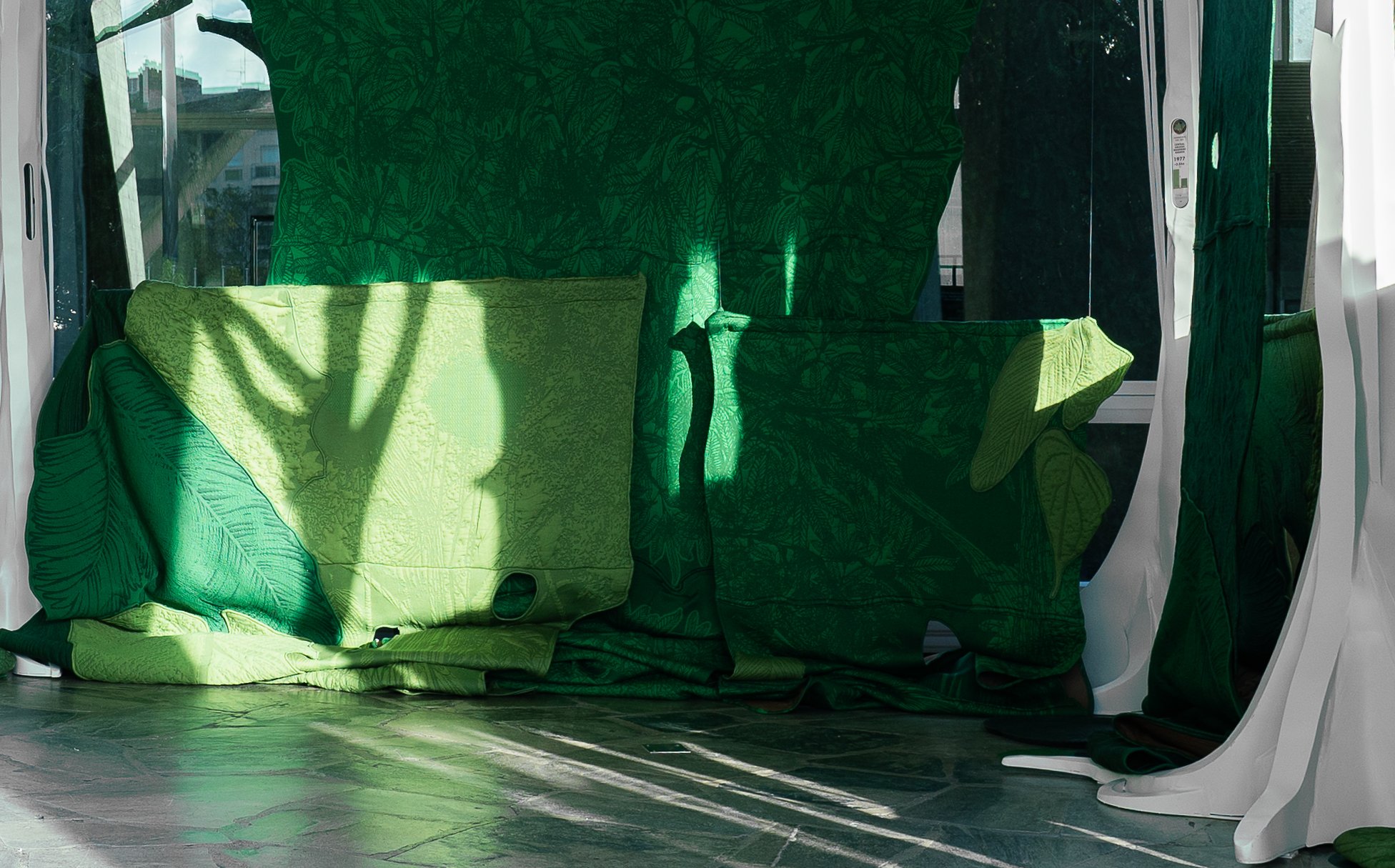
Amazonium transforms this scientific reality into an embodied experience. Rather than presenting conservation as a distant environmental goal, the installation brings the dynamics of loss and protection into the visitor’s immediate physical space.
Developed in collaboration with researcher Paulo Eduardo Massoca (Indiana University Bloomington) and guided by UNESCO’s Man and the Biosphere (MAB) Programme, the work is grounded in years of field data from the Amazon Basin.
By translating forest change into movement, sound, and atmosphere, Amazonium reveals how conservation efforts shape what survives, what disappears, and what can still be recovered.
SCIENTIFIC INSIGHT
Amazonium is driven by environmental data collected across multiple regions of the Amazon Basin, focusing on how protected areas influence rates of deforestation and regeneration.
Research from UNESCO’s MAB Programme and contributions from scientist Paulo Eduardo Massoca highlight a recurring pattern: protected zones consistently retain forest cover more effectively than unprotected areas, even under significant economic and climatic pressure.
Long-term monitoring shows that regions with formal protection experience (Pulido-Chadid et al., 2025): slower deforestation, greater biodiversity retention, and higher potential for natural regeneration, while surrounding landscapes decline at a much faster pace.
Amazonium visualises these contrasts by translating protection data into motion. The rising fabrics represent forest stability and recovery; the falling fabrics express ecological loss in areas where protection is weak or absent.

THE EXPERIENCE
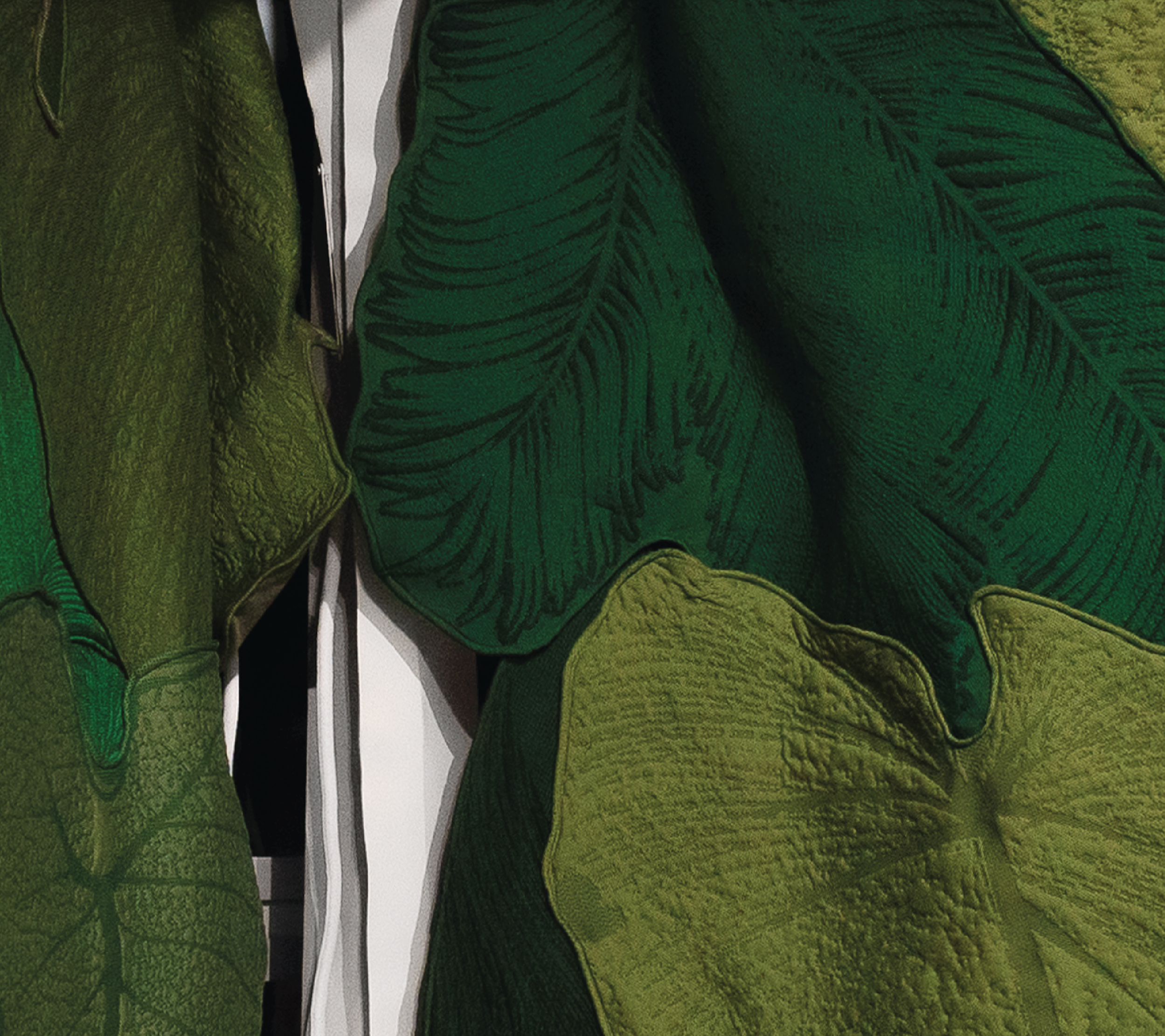
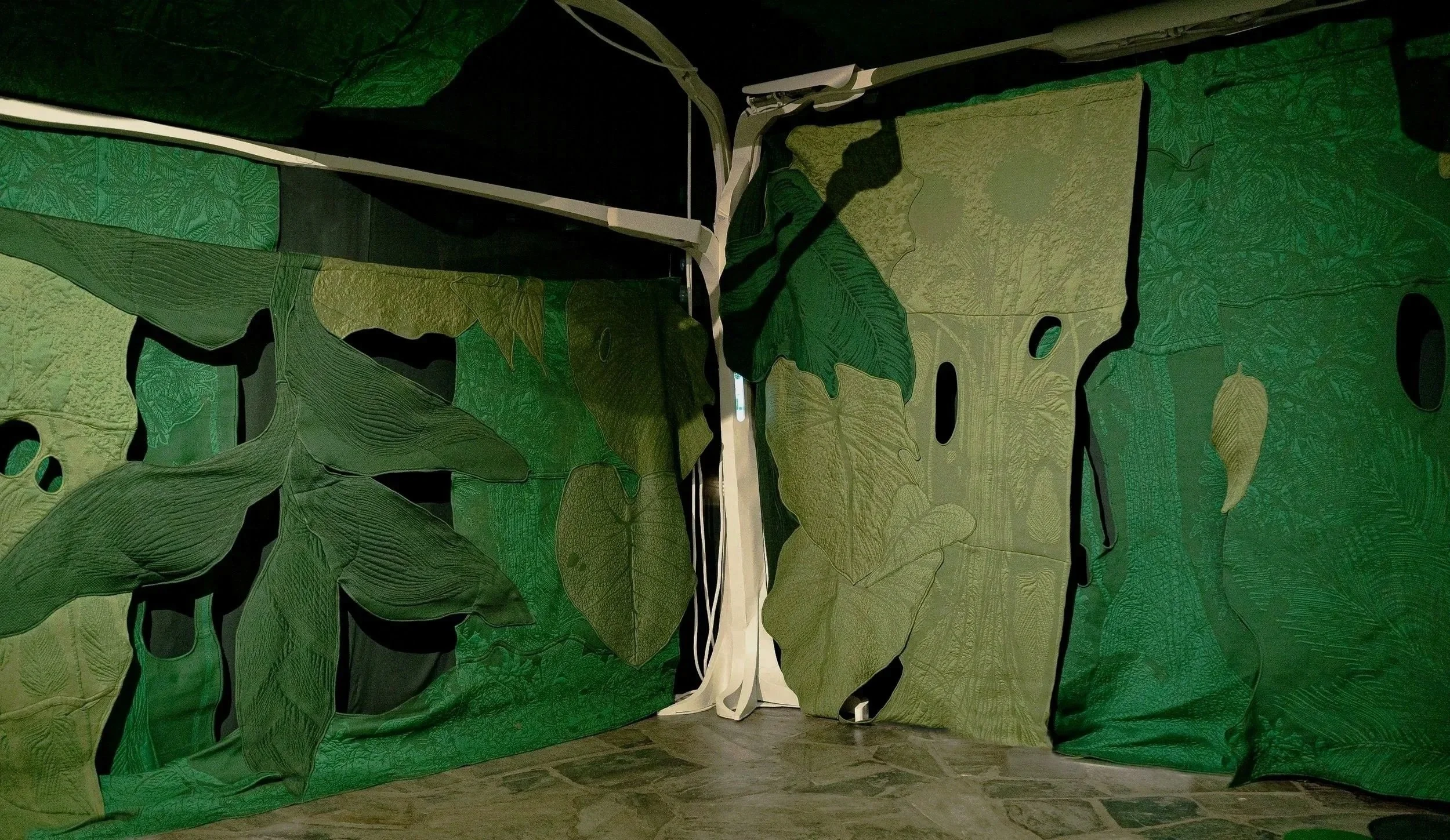
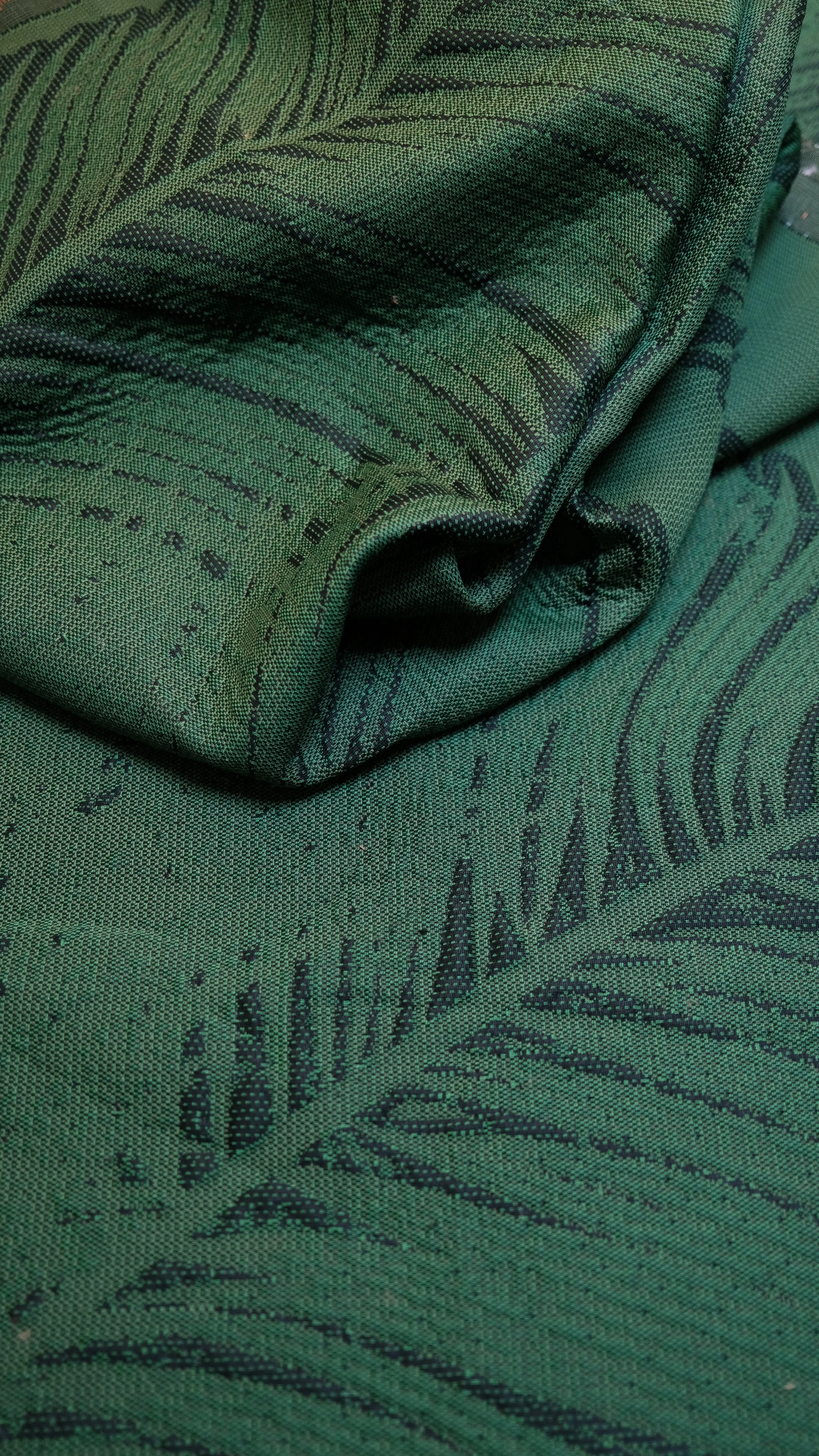
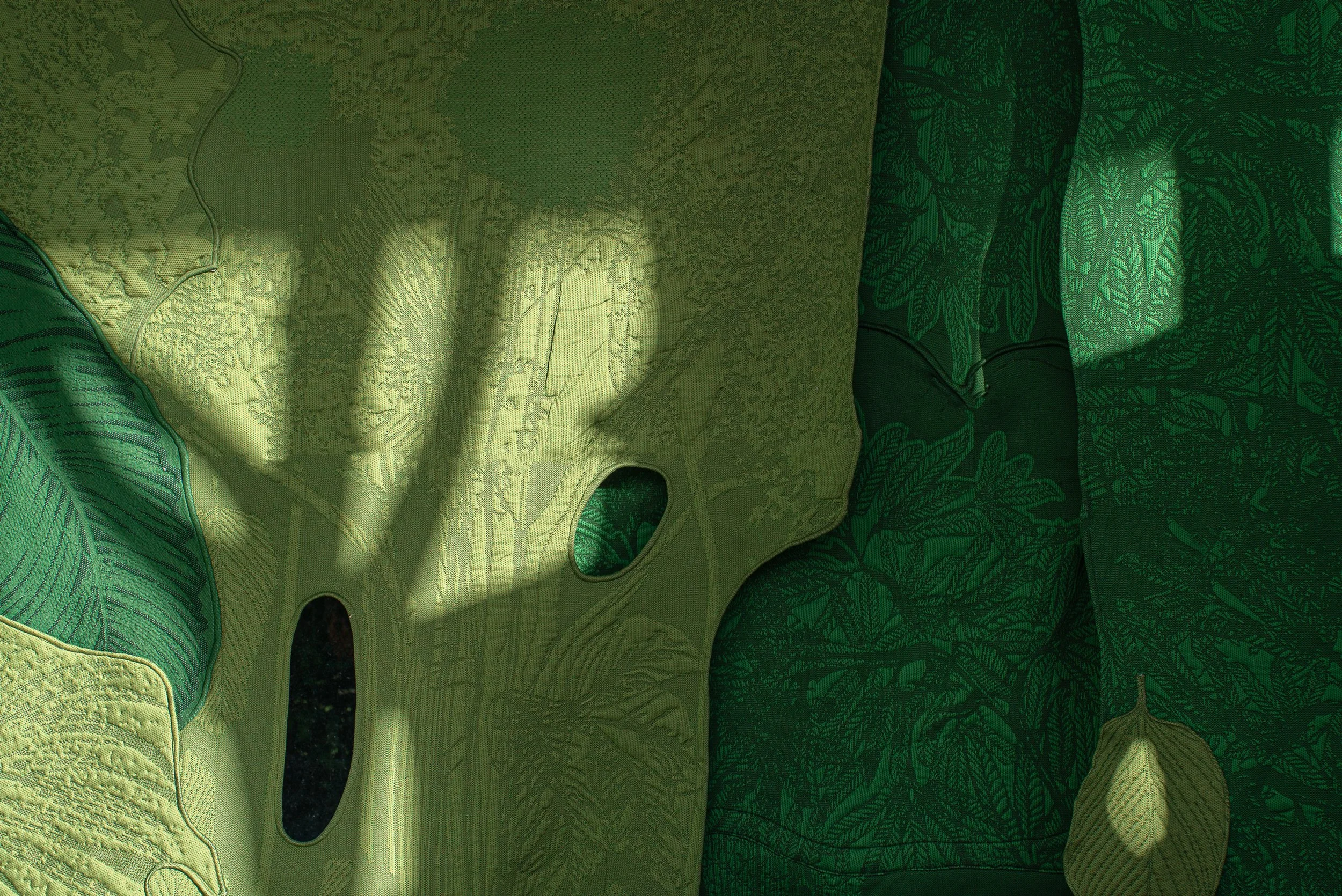
The installation surrounds visitors with large-scale fabric panels printed with forest textures.
These panels rise and fall in a choreographed cycle, mirroring the patterns of conservation and deforestation observed in the data.
When the fabrics lift, they envelop the viewer in a sense of density and resilience, an echo of what it feels like to stand inside a healthy rainforest. When they descend, the space opens abruptly, revealing an unsettling emptiness that reflects clearings left by deforestation.
A responsive 3D soundscape reinforces these shifts. As the forest contracts, the sound thins and fragments; as protected areas thrive, the sonic environment becomes richer and more layered. An earthy, forest-derived scent deepens the immersion, grounding the experience in sensory memory. The movement is quiet but insistent, a cycle of loss and regeneration that continues regardless of human presence.
Amazonium draws on the artist’s field mission with UNESCO MAB and LVMH, translating the experience of remote conservation sites into a form that can be felt rather than merely understood.


MATERIALISATION
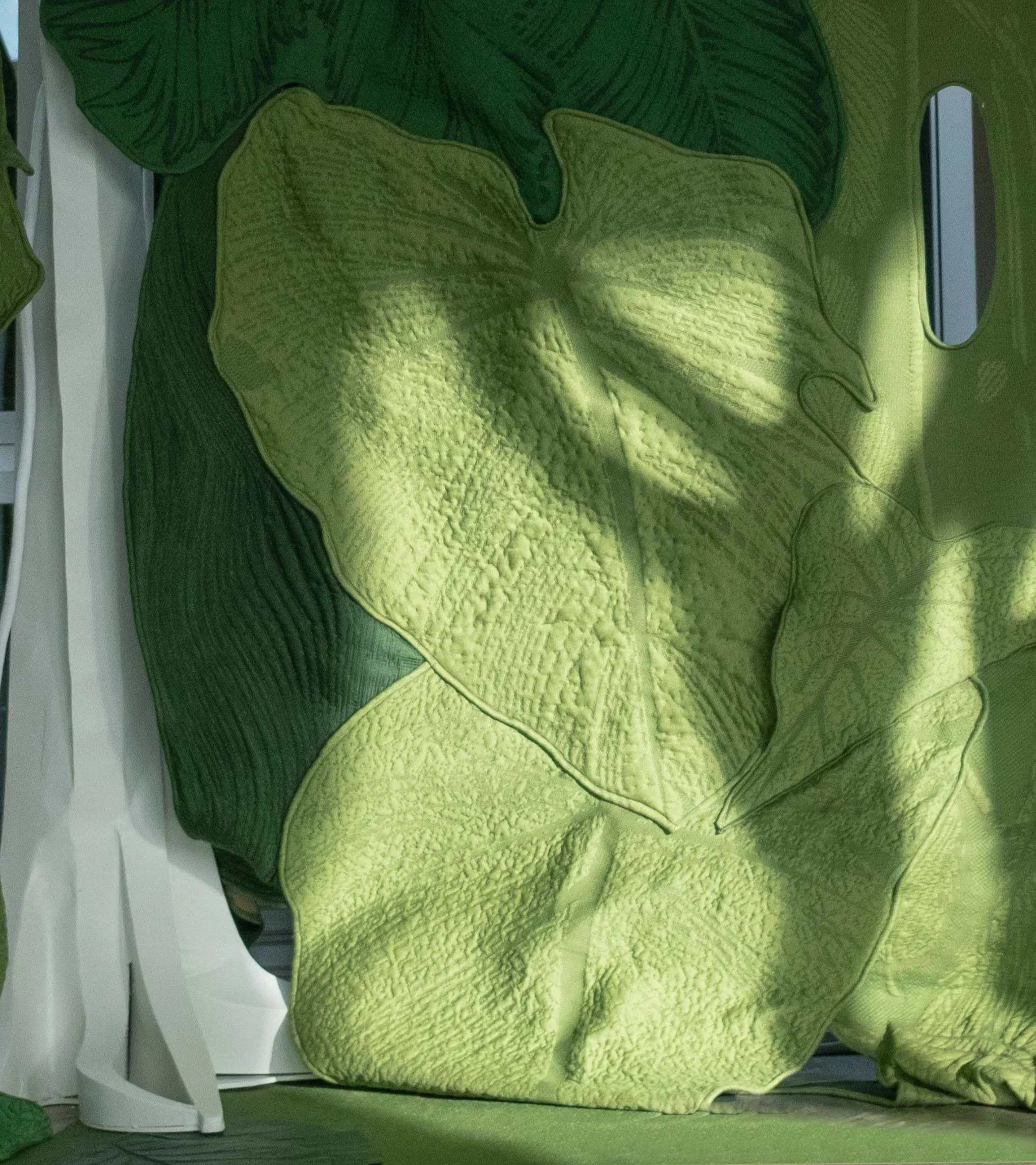
Amazonium is built using sustainable woven fabrics and LVMH dead-stock textiles, chosen both for durability and for their connection to real materials gathered during the artist Thijs Biersteker’s mission. The printed designs are based on sketches, photographs, and impressions captured in the Brazilian Amazon, giving the fabrics an origin rooted in lived experience.
The structure uses recycled steel, forming a frame that houses integrated screens displaying live or processed deforestation data. Engine systems lift and release the fabric panels according to TouchDesigner-controlled sequences that respond to changing data inputs.
To complete the multi-sensory environment, the installation includes:
an earthy scent inspired by forest soil and humidity
a 3D generative soundscape that evolves with forest gain or loss
precise valve and engine mechanisms that choreograph the fabric’s movement


| Sustainable woven fabrics |
| LVMH dead-stock textiles |
| Recycled steel |
| Integrated screens |
| TouchDesigner |
| Engine systems |
| 3D generative soundscape |
THE IMPACT
Amazonium aims to deepen public understanding of conservation by offering a direct, embodied sense of what protection achieves, and what happens in its absence.
By contrasting the presence of a thriving forest with the void left by deforestation, the work bridges the gap between large-scale environmental data and personal experience.
Rather than presenting conservation as a distant policy matter, the installation highlights it as a lived, spatial reality. Visitors feel the difference between protected and unprotected landscapes long before they analyse it.
This shift from information to sensation creates opportunities for dialogue across fields such as ecology, policy, cultural institutions, and corporate sustainability.
By grounding complex environmental dynamics in sensory experience, Amazonium supports a more nuanced understanding of why protected areas matter, not as abstract concepts, but as active systems that shape the planet’s future.
In this way, the artwork contributes to a recognition of the value of conservation: not through urgency or alarm, but through experience, insight, and a renewed connection to the landscapes that sustain global biodiversity.
| EXHIBITIONS |
| Nature House at COP16 (C0), 2024 |
| Unesco General Conference Paris (FR), 2023 |
CREDITS
Technical build
Thijs Biersteker, Bastiaan Kennedy
Soundscape
End of Time
Fabrics by
Nona Source, ByBorre
Seamstresses
Małgorzata Vicente, Lilla Baksay
Technical Assistants
Tomáš Potůček, Theo Rekelhof, Robin Vrugt, Storm van Gils
Artistic Lead
Thijs Biersteker
Scientific Collaboration
Paulo Eduardo Massoca - Indiana University Bloomington, Meriem Bouamrane - UNESCO
Production
Woven Studio
Studio Director
Sophie de Krom
Technical Engineer
Tom Bekkers, Denisa Půbalová
With special thanks to
Alexandre Capelli, Nona Source, Matthieu Guével, Ed Douwes, Tyler van Gelder, Anna Juncadella, Kim Bénéroso Ponsin, Carlos Gangoso, UNESCO Brazil team.
Credits images and video
Thijs Biersteker
Sources and Research
Amazon forest stability patterns supported by Zhong et al. (2025)
Protection effectiveness insights supported by Pulido-Chadid et al. (2025).