
Polestar
GASP
Enlarging the particles around us to reveal the largest threats to humanity.
INTRODUCTION
Air pollution is often described through numbers, AQI levels, particle counts, risk percentages, but its presence is largely invisible. We breathe without seeing what we inhale, and as a result, the scale of its impact remains abstract.
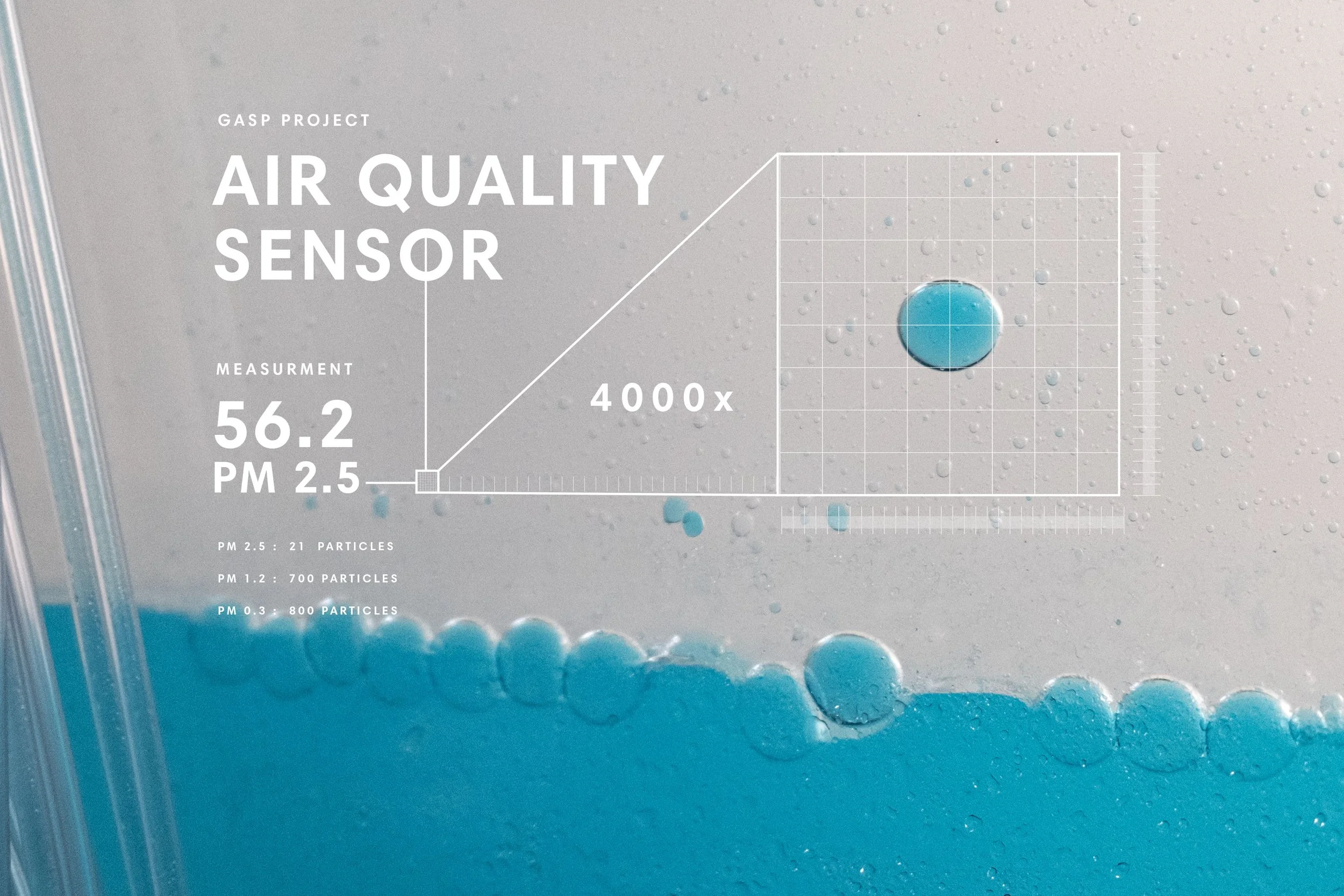
GASP makes this invisible presence tangible. By enlarging airborne particles thousands of times, the installation reveals the material reality of air quality and its direct relationship to human health.
The work focuses on PM2.5, the fine particulate matter small enough to enter the bloodstream, accumulate in organs, and reduce life expectancy. These particles are linked to strokes, heart attacks, cognitive decline, and respiratory disease. According to the World Health Organization, exposure to polluted air contributes to an estimated 7 million premature deaths each year.
By grounding global statistics in the air immediately surrounding the visitor, GASP reframes pollution not as a distant environmental issue, but as something encountered constantly, intimately, with every breath.
THE SCIENCE
GASP is built on data and guidelines from the World Health Organization, which defines PM2.5 levels across categories from “healthy” to “hazardous.”
PM2.5 refers to particles measuring 2.5 micrometres or smaller, light enough to remain suspended in the air, but dangerous enough to lodge deep within the lungs.
These particles are associated with serious health impacts: cardiovascular disease, neurological decline, respiratory illness, and a measurable reduction in life expectancy.
The installation translates these scientific assessments into a visual system that reveals not only the presence of PM2.5 but also the long-term health implications of sustained exposure.
The data indicates how much time pollution can deduct from a person’s life if they were to live in a given location long term, an abstract calculation that GASP renders visible and immediate.


THE EXPERIENCE
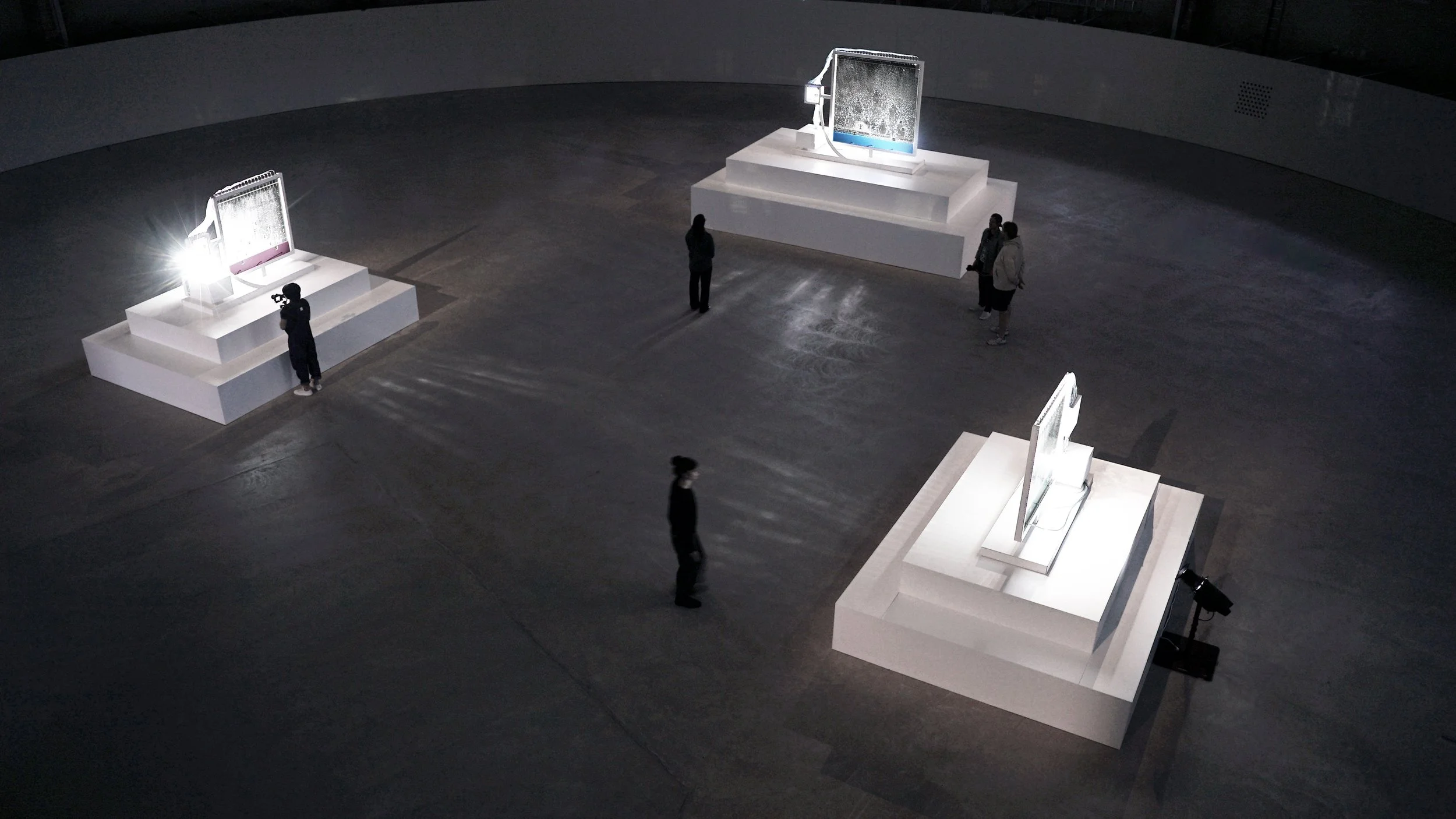
See the air you breathe: the artwork GASP magnifies pollution 4000x to reveal what enters your lungs with every breath you take.
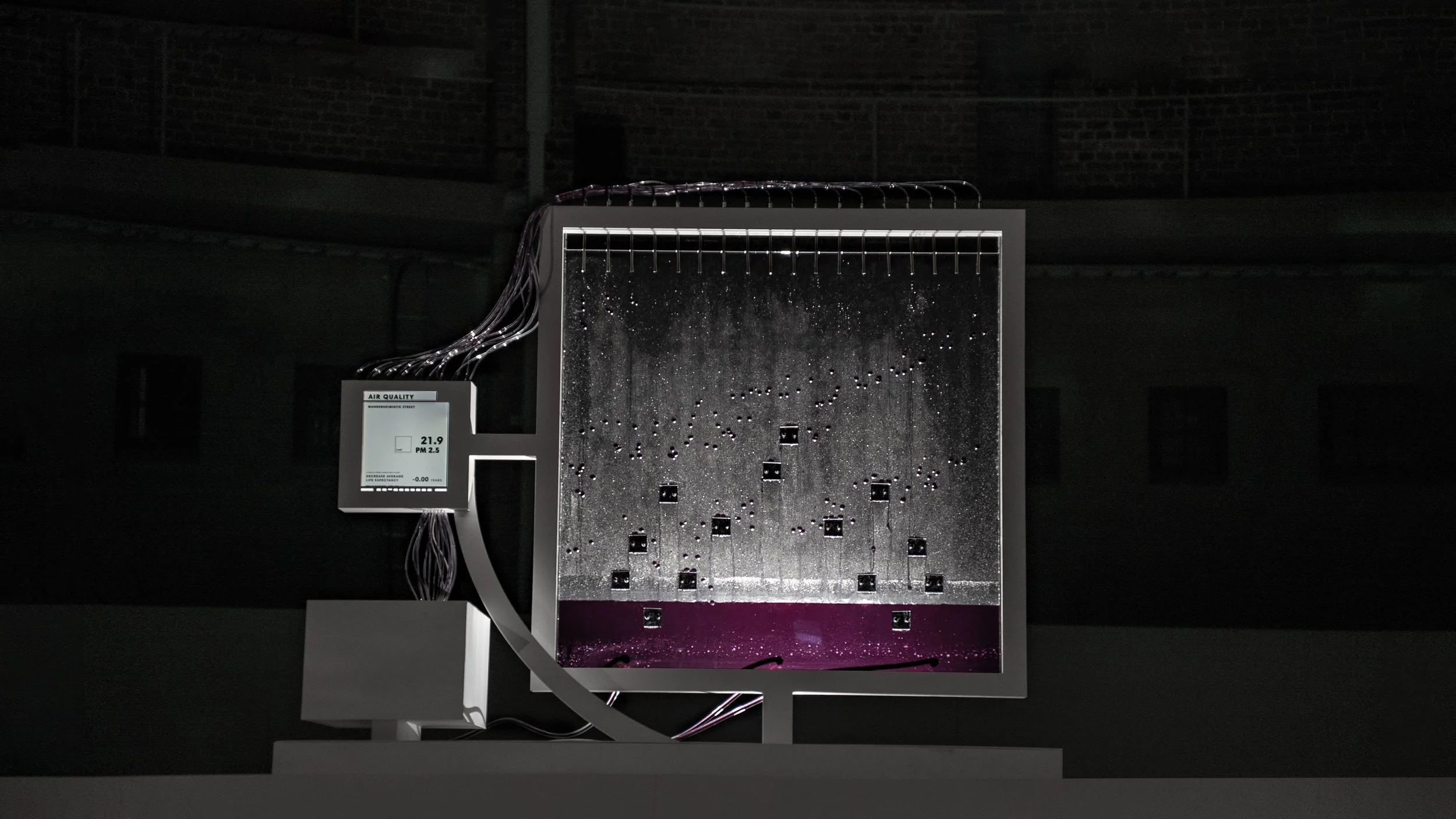
Sensors scan the surrounding air in real time, detecting concentrations of PM2.5. Each detected particle triggers the release of a droplet of paraffin into oil, expanding microscopic material into a visible form. The result is a field of slowly shifting shapes, an enlarged, data-driven portrait of the air.
The system updates continuously, revealing fluctuations throughout the day. Multiple sculptures can display readings from contrasting environments, such as a main road and a nearby forest, offering visitors a comparative and embodied understanding of air quality.
What would normally remain invisible becomes a live choreography of ink and oil, mirroring the microscopic movements occurring inside the lungs.
The experience is both intimate and unsettling: a direct encounter with the particles shaping our health in real time.

MATERIALISATION
The artwork is designed as a functional magnifying device.
PM2.5 sensors capture airborne particles and send their readings into TouchDesigner, which translates the data into timed releases of paraffin droplets. As the droplets fall into oil, they expand into large, moving forms, visualising particles that normally evade the eye.
The structure is built from recycled steel, and all mechanical components, including valves and tubing, are engineered to synchronise precisely with live sensor data.
The materials and mechanisms embody the dual nature of the work: part scientific instrument, part organic display.
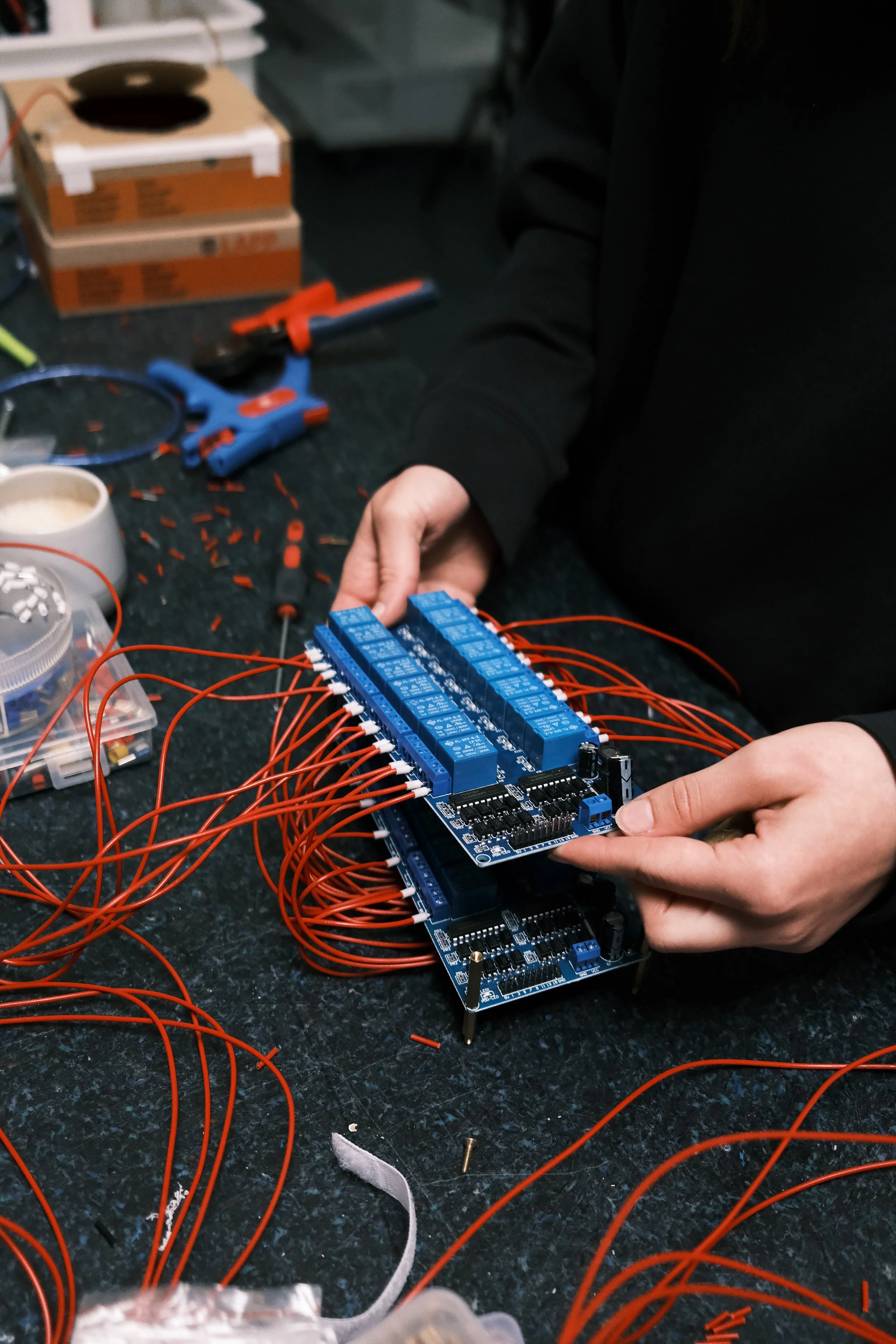


| PM2.5 sensors |
| Recycled steel |
| Oil and paraffine |
| TouchDesigner |
| Valves |
THE IMPACT
GASP sets out to build awareness around the health consequences of air pollution by making particulate matter visible at the scale of human perception.
By translating PM2.5 data into a physical, dynamic form, the work creates a direct encounter with something that normally remains unseen, allowing visitors to understand air quality not as a distant statistic but as a presence that shapes their bodies every day.
The artwork offers a way of seeing, making it possible to recognise how environmental exposure shapes health, and how unevenly that exposure is distributed. By exposing the disparities between sites, busy roads, parks, industrial zones and residential areas, the work encourages a deeper understanding of the uneven distribution of environmental risk.


Artistic Lead
Thijs Biersteker
Scientific Collaboration
Fredrika Klarén (Polestar)
Studio Director
Sophie de Krom
Technical Lead
Thijs Biersteker, Tom Bekkers
Denisa Půbalová
| EXHIBITIONS |
| Flow Festival Helsinki (FI), 2023 |