
VILLARS INSTITUTE
Memories of the Melted
Showing the past, present and possible futures of Glaciers.
INTRODUCTION
Glaciers act as the planet’s “visual thermometers,” offering one of the clearest records of climate change over time.
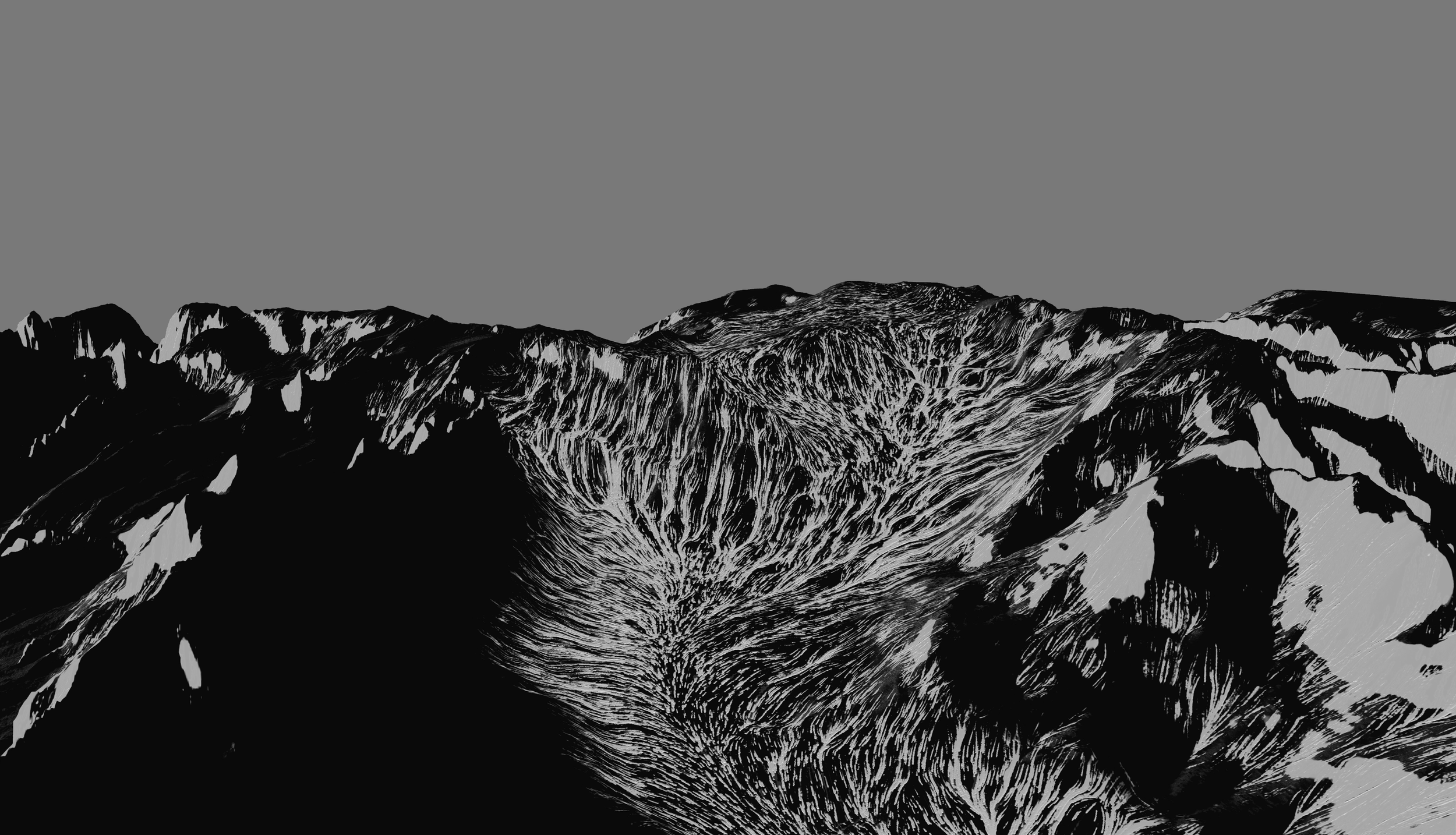
Their retreat is both a scientific measurement and a lived reality that affects ecosystems, water resources, and global climate systems. Yet the scale and speed of their transformation often remain abstract, communicated through charts and reports rather than experience. Memories of the Melted makes the past, present and future of glaciers visible.
Developed with glaciologists Matthias Huss and Heïdi Sevestre for the International Year of Glaciers’ Preservation, the installation transforms glacier data into a generative artwork that visitors can see, hear, and physically engage with.
By merging scientific records with sensory experience, the work offers an embodied understanding of glacial change, revealing what has already vanished, what remains, and what future is still possible.
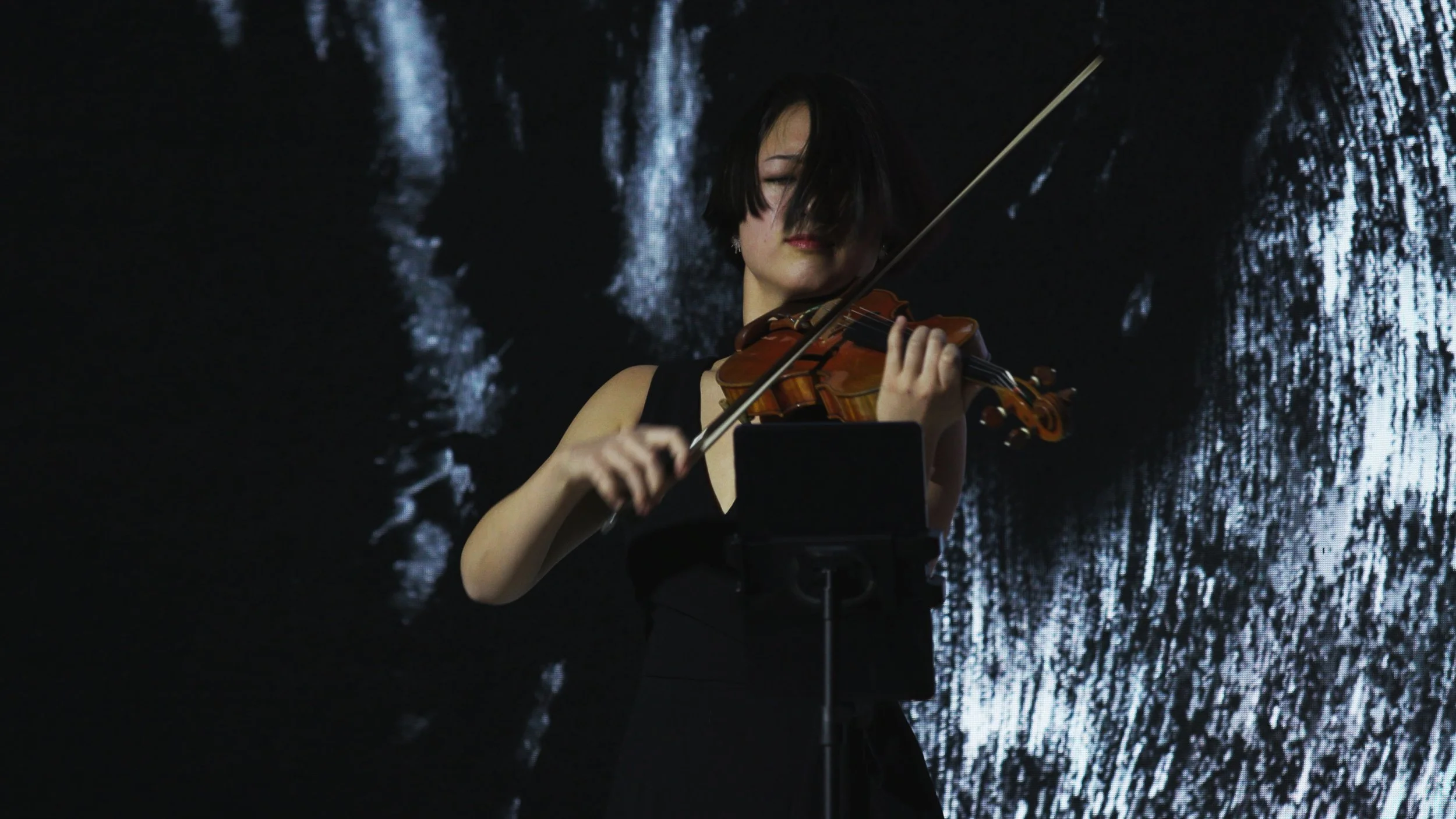
Music Performance
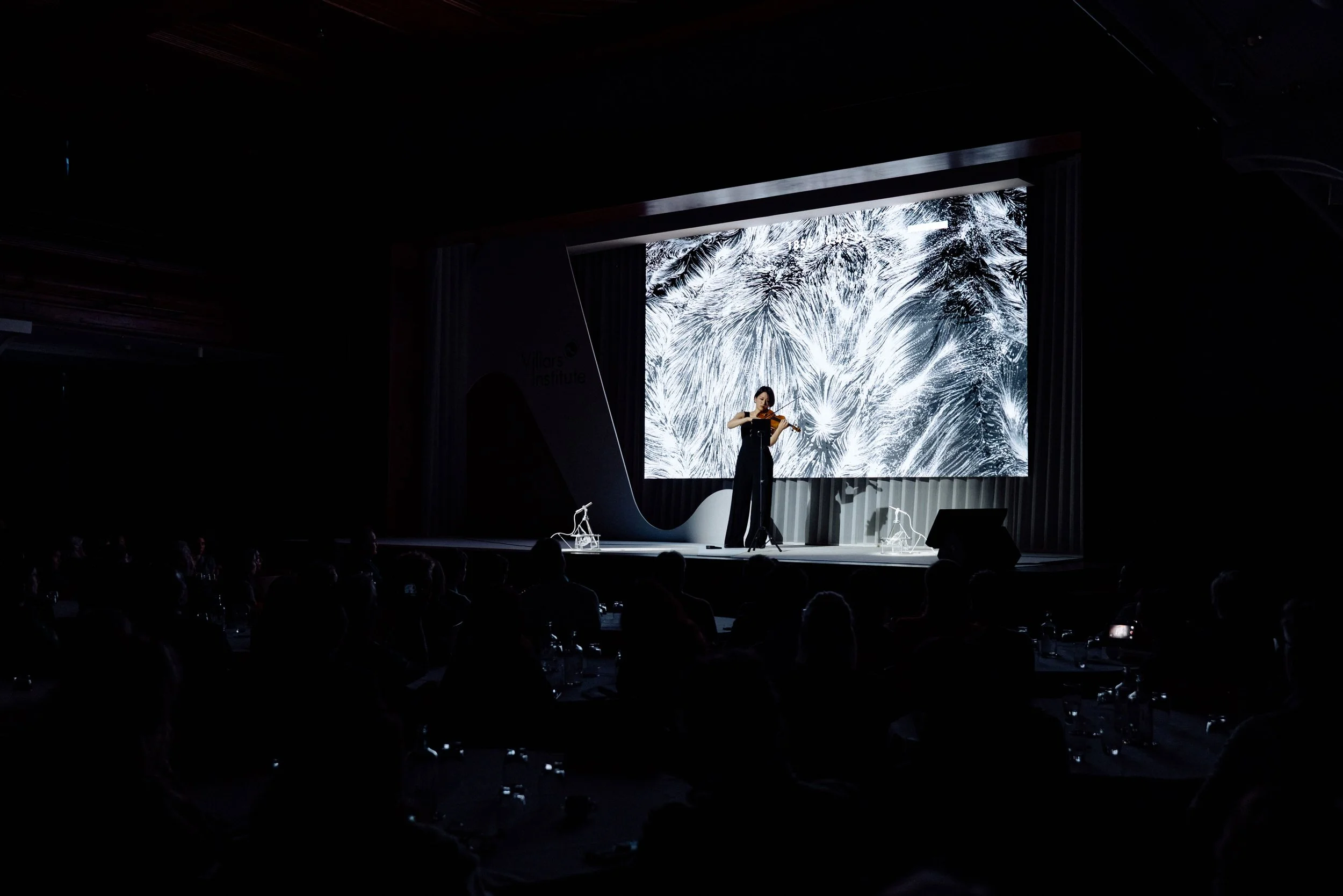
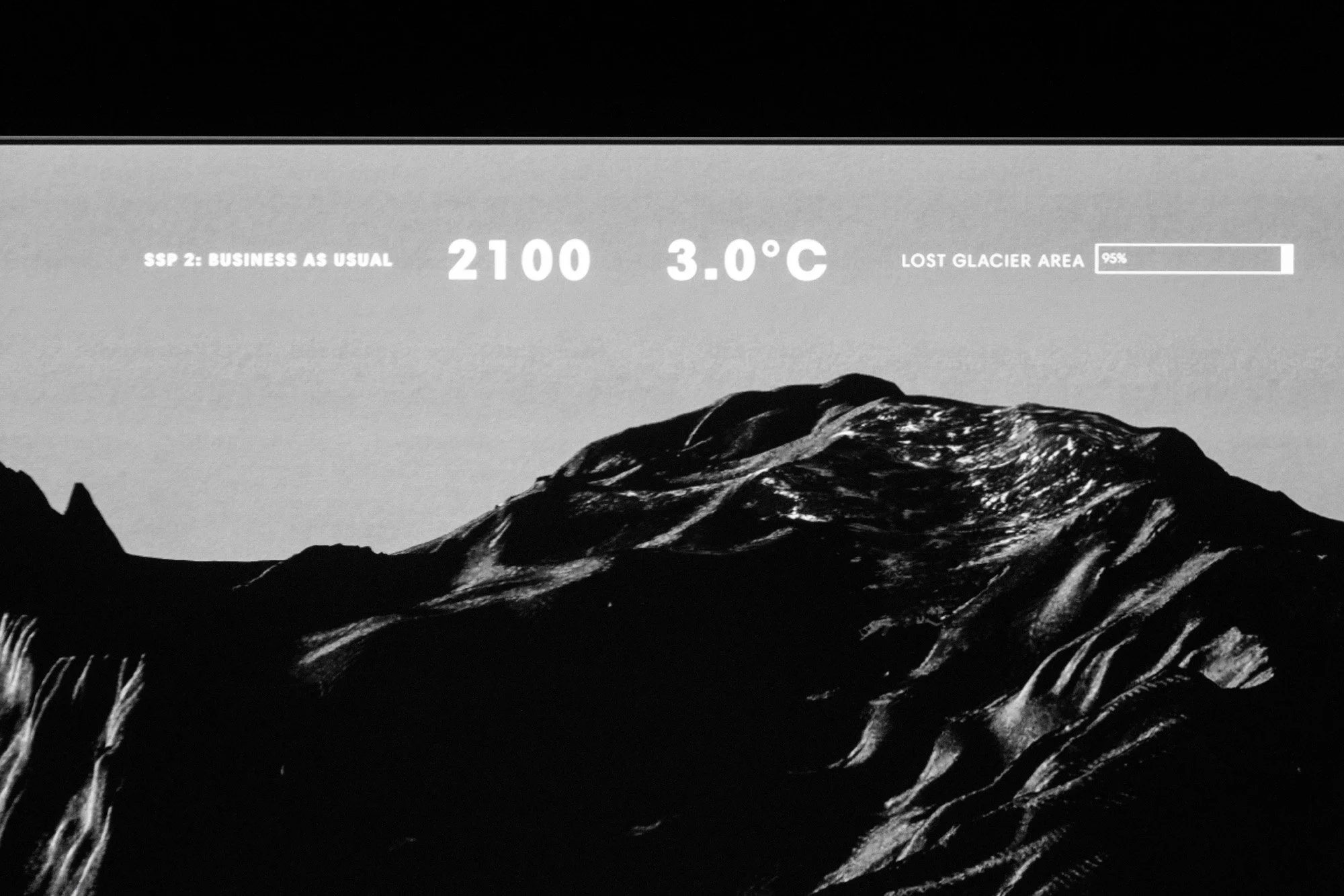
In the live performance, each drip of meltwater responds to the tones, rhythms, and frequencies played by a musician. The performance consists of four acts that each visualise a different IPCC climate scenario (SSP1, SSP2, SSP5, and historical data). Data meets emotion as sound shapes aligns with behaviour of the glacier model in real time. In response to the scenario and the music, the glacier shifts in scale, shape, and melt rate as the music unfolds. The performance demonstrates how scientific information and artistic interpretation can amplify one another, making the future of glaciers both comprehensible and deeply felt.
CREDITS
Artistic Lead
Thijs Biersteker
Glacier Scientists
Heïdi Sevestre, Matthias Huss
Generative modeling
Denisa Půbalová
Studio Director
Sophie de Krom
THE EXPERIENCE
Three different versions of the artwork have been created, all designed to create an experience in which the audience moves from observing change to feeling it.
Interactive Installation
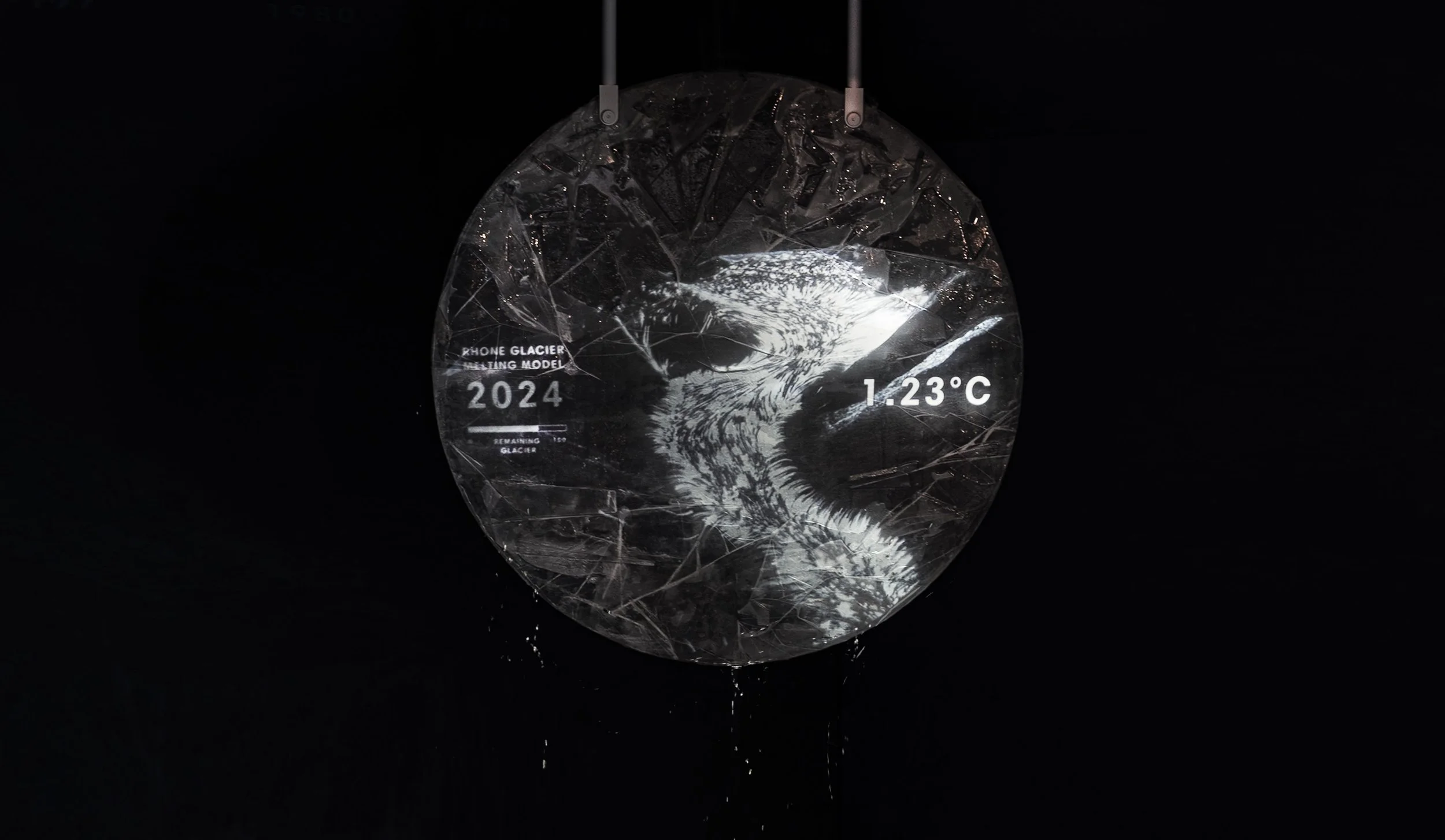
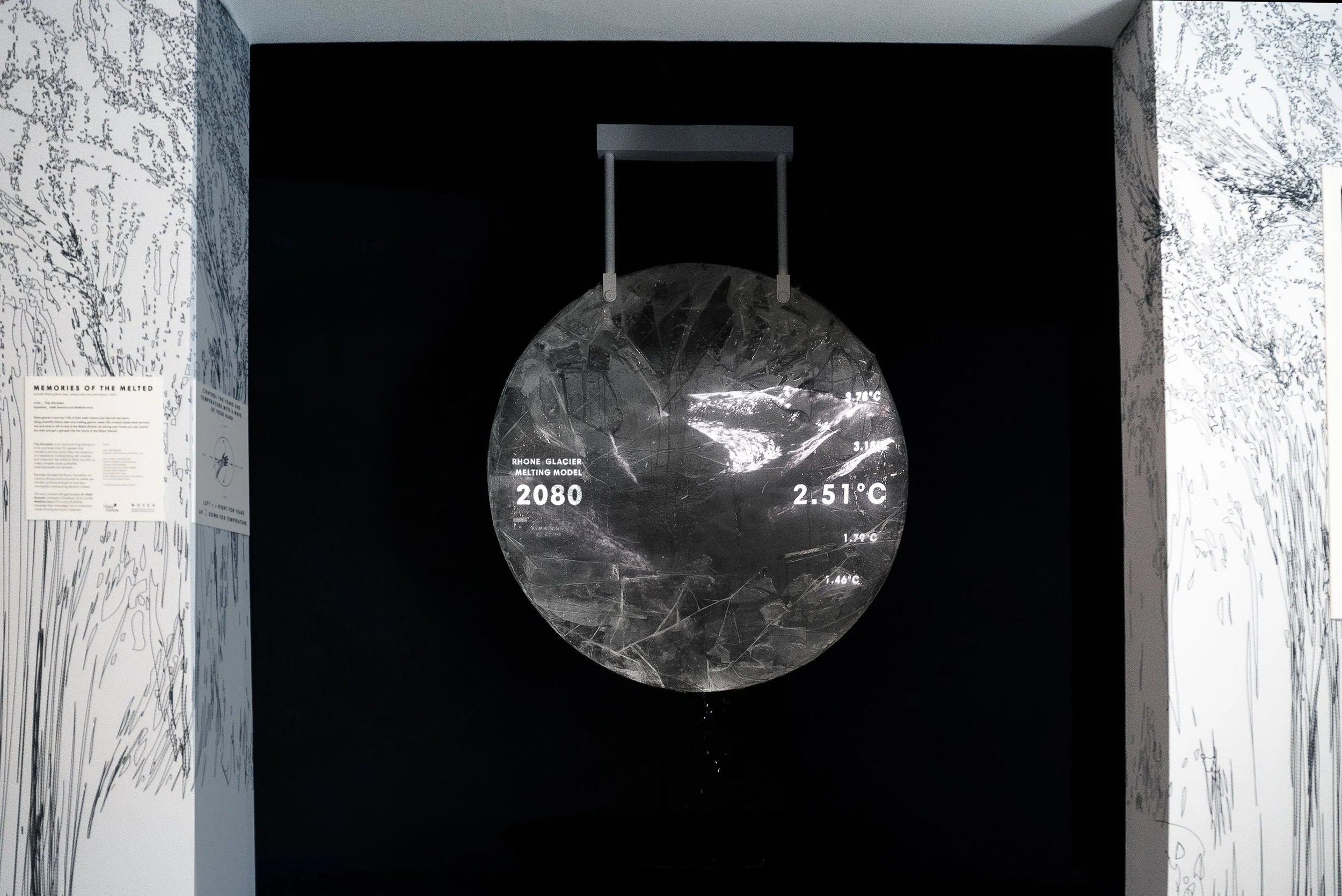
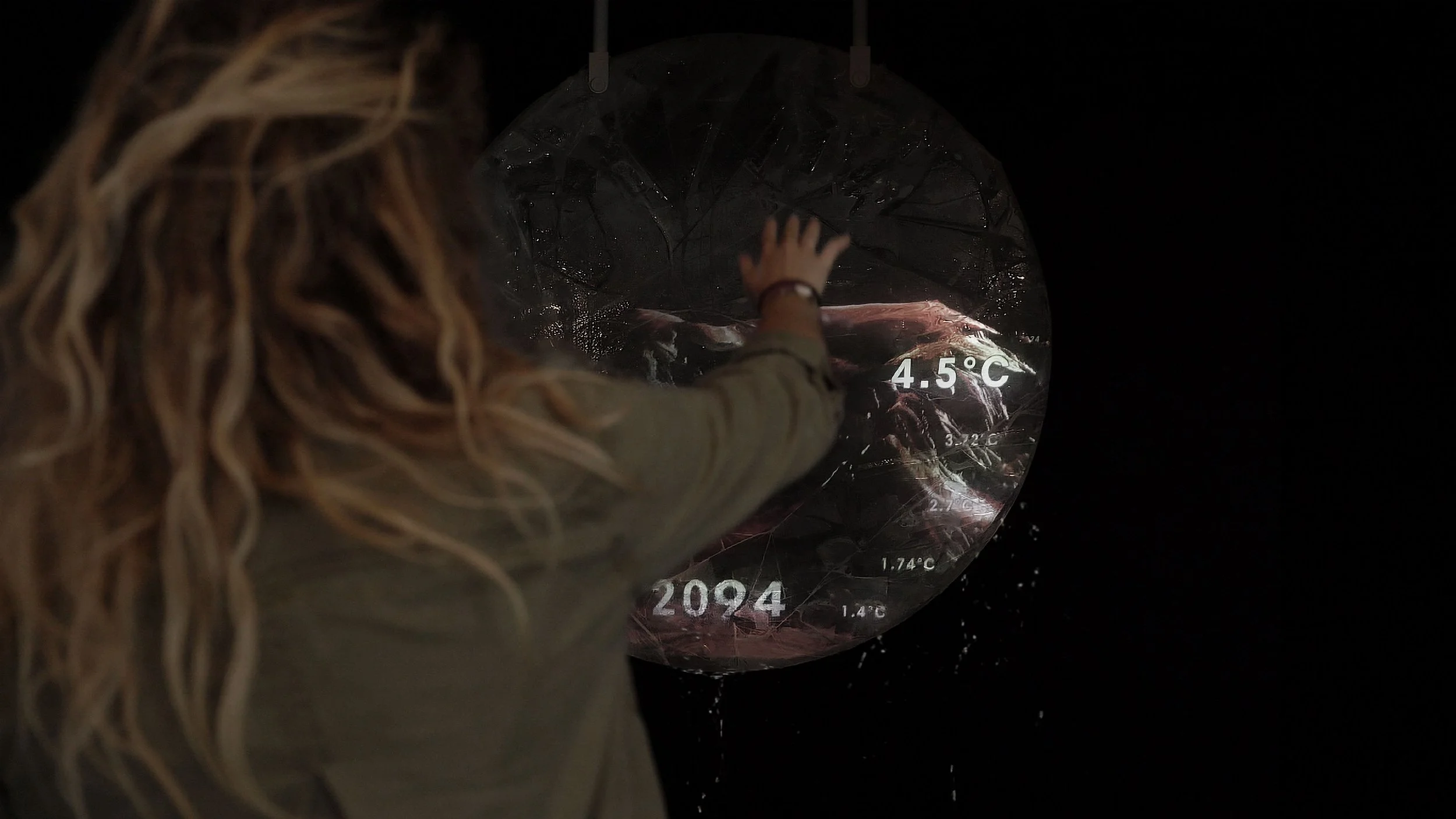
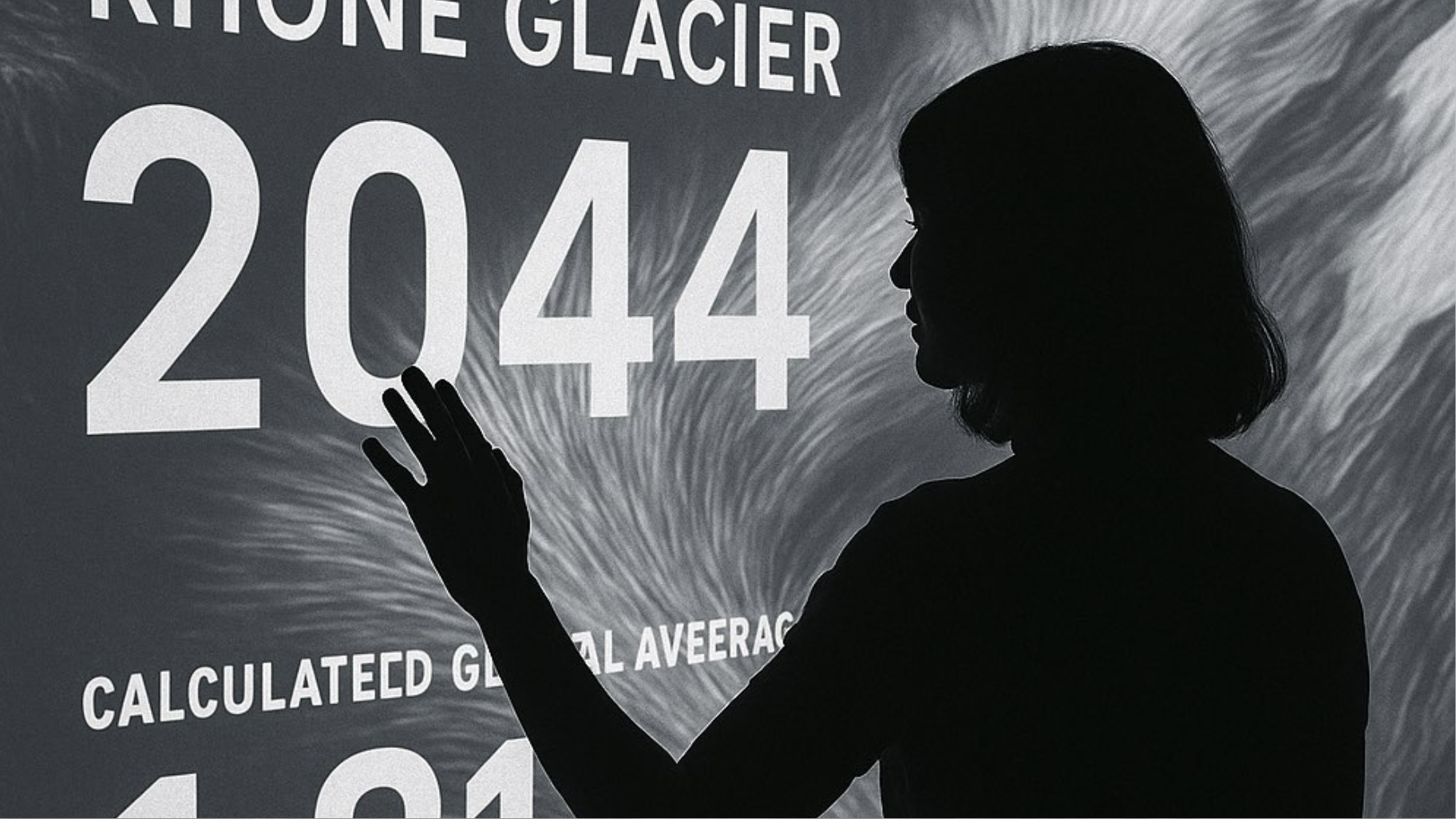
In the interactive installation, a projection of the real-time generative model appears on a suspended sheet of ice. Water drips from the sheet at the same rate the glacier is melting, turning scientific measurement into a physical, audible presence. Visitors can manipulate the glacier model using hand gestures:
Swipe left or right to move from 19th-century glacier coverage to projected states in 2100.
Raise or lower your hand to adjust temperature and explore the consequences of each SSP scenario.
As warming increases, the projection recedes and the dripping intensifies, eventually shifting into rapid streams that echo the accelerating crisis. Sound grows louder, more urgent, mirroring the amplified melt. The experience becomes a form of climate memory: a sensory record of what glaciers once were, what they may become, and the futures that remain within our control.
Immersive Projection
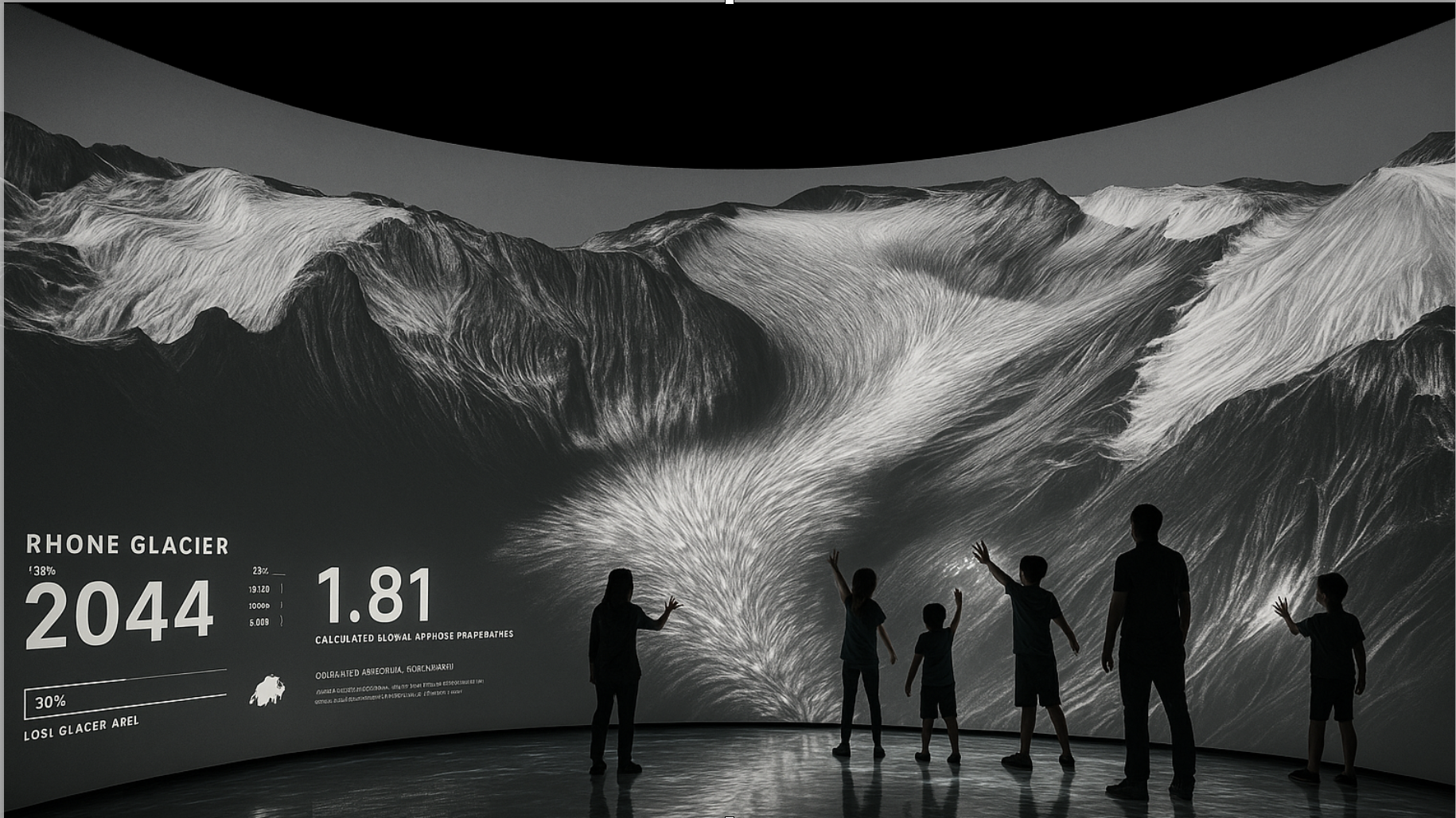
A full-room projection environment extends the glacier model across the walls and floors. Sensors track each visitor’s movement, allowing the projection to shift in response. With every step, the surrounding ecosystem adjusts, mirroring the fragility and responsiveness of glacial landscapes themselves. As visitors move through the space, they can shift temperature settings, explore different years, and change the flow of ice and meltwater. Their presence becomes part of the system, reinforcing the idea that human action and environmental futures are inseparable.
Technical lead
Tomáš Potůček
Audio Engineer
Rahsaan Bleijs
| EXHIBITIONS | |
| Montreux Jazz Festival (CH), 2024 | |
| Villars Summit (CH), 2025 | |
| 3Space conference (UK), 2025 |
SCIENTIFIC INSIGHT
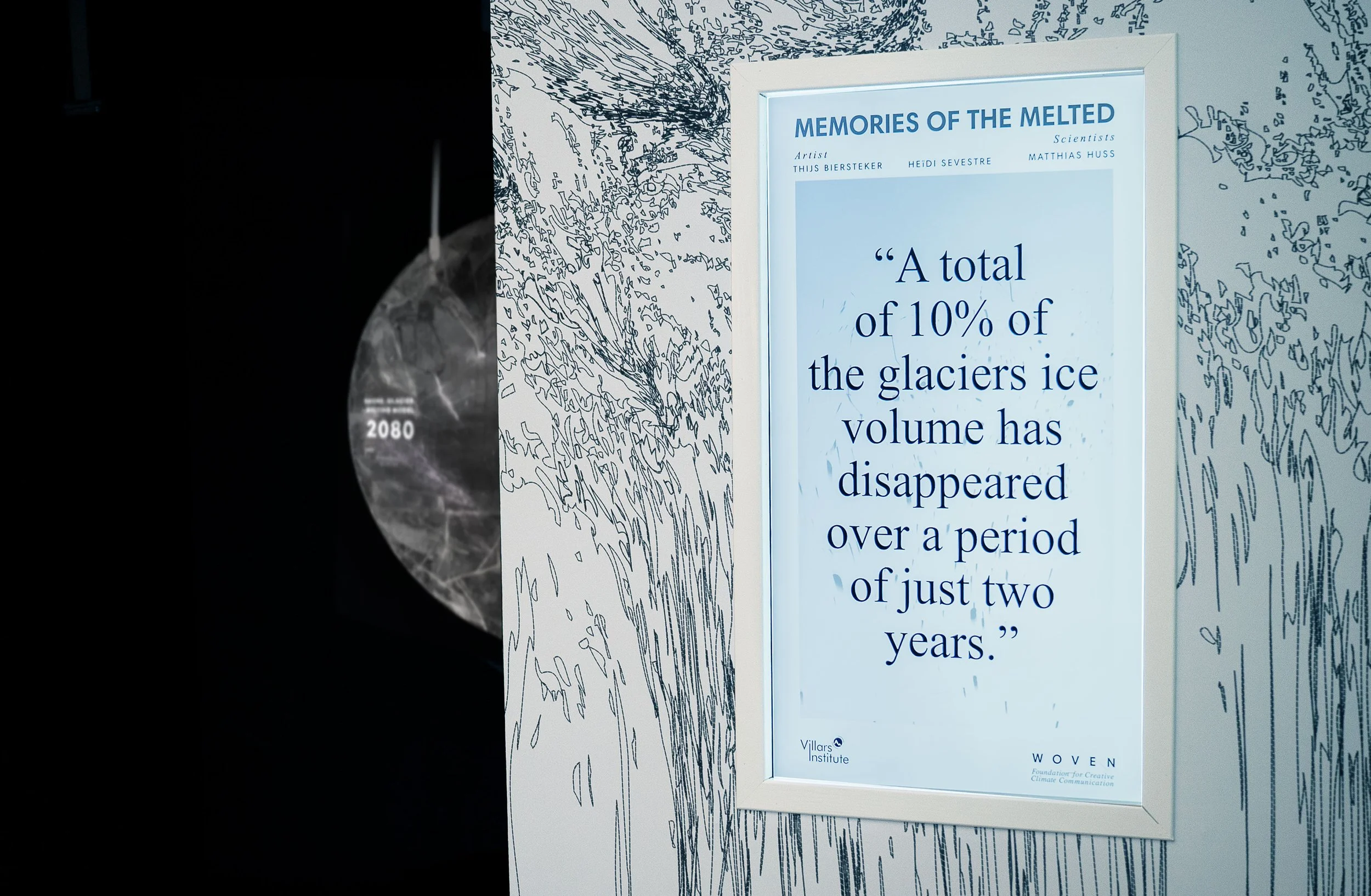
Over the last decades, glaciers have undergone some of the most rapid transformations in recorded history. In the Rhône Glacier alone, 10% of its ice volume disappeared in just two years, a rate of loss that underscores the urgency reflected in global glacier datasets.
The artwork is built on more than 131,900 data points, spanning from the 1800s to the present and future, combined to generate a real-time model of the glacier. These datasets include:
Glacier inventories (SGI1850 and SGI2016): Historic and modern records documenting glacier extents over nearly two centuries.
Historical elevation models (ca. 1880): Showing how glacier surface height and thickness have changed over time.
Annual mass balance datasets (2023 release): Measuring yearly thickness losses and providing precise trends of retreat.
Ice thickness and bedrock maps (ETHZ release): Revealing subsurface structure essential for understanding glacier dynamics.
Future climate scenarios (SSP1, SSP2, SSP5): Projecting glacier coverage under different socioeconomic pathways, ranging from fossil-fuel development to sustainability-focused transitions.
Using these datasets, a real-time generative model reconstructs the past, simulates the present, and projects three possible futures based on these three Socioeconomic Pathways:
SSP5 (Fossil-Fueled Development): rapid and nearly complete loss
SSP2 (Business as Usual): continued but moderate retreat
SSP1 (Sustainability): slower loss with meaningful preservation potential
Matthias Huss is a Swiss glaciologist leading the Glacier Monitoring in Switzerland (GLAMOS) program at ETH Zurich. He has published extensively on glacier mass balance and the implications of melting ice for water resources.
Heidi Sevestre is a French glaciologist recognized for her work on bridging science, policy, and public awareness. She has conducted research in polar regions and mountainous areas worldwide, contributing critical insights into glacier dynamics and climate impacts.
Their collaborative expertise ensures the accuracy of each shift in the model, grounding the installation not in state-of-the-art glaciological research. As glacier conditions evolve, the data feeding the installation will update accordingly, mirroring the alarming pace at which the world’s ice continues to change.
With special thanks to
The Robert Dunand Prize, The Villars Institute, The Villars Music Academy, Montreux Jazz Festival, Julia Marton-Lefèvre, Lee Howell, Joëlle Chevalley, Roman Guggisberg, Mathieu Jaton, Andrea Bandelli, Emma Benameur, Chiara Brouwer, Cobi Berculo, Daan van der Sman, Kenyan Mayet and all involved.
Credits images
Villars Institute
Video editor
Evelyne Adeyinka